

Egypt does not get much rain, but it gets it at the worst moment. A winter storm arrives, water ponds on a flat roof, and an old crack finally opens. So good roof protection from rain is not about the field of the roof. Also, it is about falls, outlets and parapets, the lines where water actually goes.
On the roofs of Cairo International Airport and Berenice International Airport, Krypton Chemical’s answer was Polyurea Rayston, a hot-spray pure polyurea. For airport and similar flat roofs, Krypton’s airport roofs application page names three reference products: Rayston Spray Primer 150, Polyurea Rayston and a Colodur finish.
Why Roof Protection from Rain Fails in Egypt
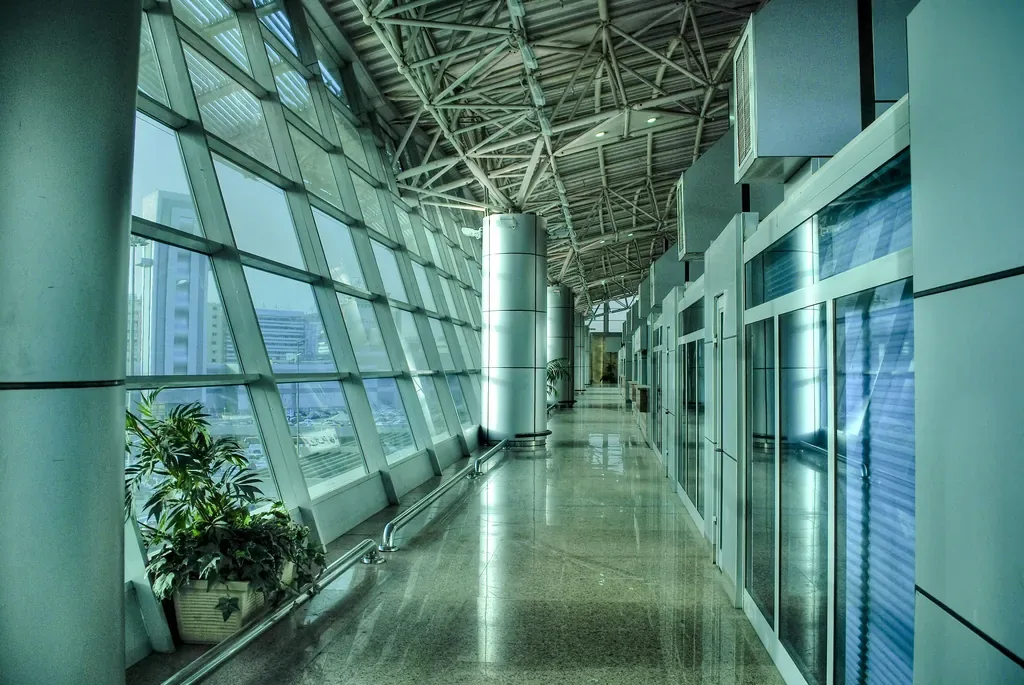
Krypton’s application page describes the load plainly. Roofs work under rain, sun, thermal movement and ponding. Before anyone picks a membrane, the falls, outlets, upstands and penetrations must be surveyed.
In Egypt, the sun makes rain more dangerous. A wide concrete deck heats at noon and cools at night. As a result, the slab moves every day, and tired joints open. Then the first storm finds them.
Water on a flat roof also runs to the outlet and the parapet. That is exactly where a weak detail fails. In short, a roof leaks at its edges long before its middle.
The Cairo Airport Case: A Working Lid over People
In 2020 and 2021, the roofs of the Ministry of Aviation building and the Seasonal building at Cairo International Airport were waterproofed with Polyurea Rayston. El Fath Contracting applied it, and Krypton made the resin.
According to the Cairo Airport project page, the Seasonal building takes the Hajj peaks. So the roof could never be a reason to close a hall. Therefore the system had to close each bay on the day it was sprayed.
The result is one continuous film across the field and up the details that take the water.
Berenice: Rain, Salt and Red Sea Sun
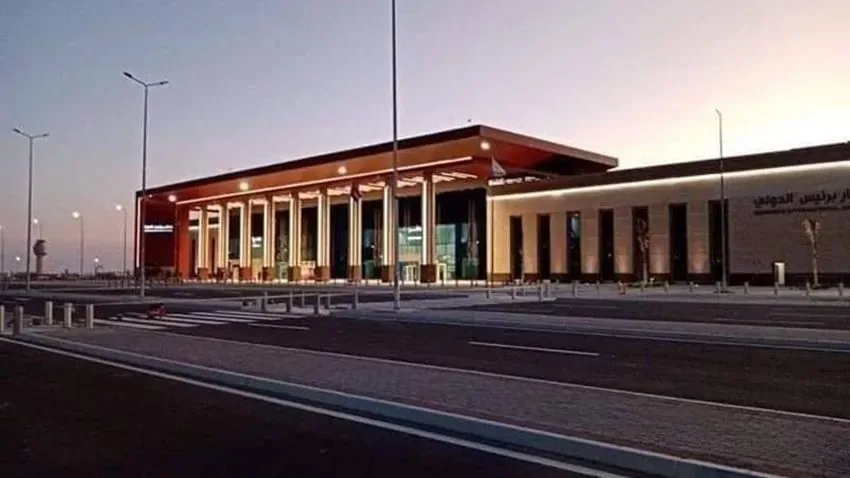
In 2020, the roofs of Berenice International Airport on the Red Sea coast received the same membrane. Core, of Hassan Allam Sons, held the contract. Here, salt air joins hard sun. Consequently, the film must stay elastic while the deck swings between hot afternoons and cooler nights.
Official Figures for Roof Protection from Rain
These are the product’s own figures, as quoted on the airport project pages.
| Property | Official value |
|---|---|
| Typical build | 1.5–2.0 kg/m² (about 1.5–2 mm) |
| Gel / tack-free | About 4 s / about 30 s |
| Elongation | About 324% |
| Tensile / tear strength | About 16.2 MPa / 69 N/mm |
| Water permeability | 0.002 kg/m²·h^0.5 |
| Crack bridging | A5 at −10 °C; B4.2 at 23 °C and −20 °C |
Krypton adds a careful note. CE marking to EN 1504-2 and ETA 16/0148 belong to the product. They are not a measurement taken on these roofs. You can check the ETA in the EOTA database, and read about the product on its kryptonchemical.com page.
Old Roofs: Rain Protection over Existing Layers
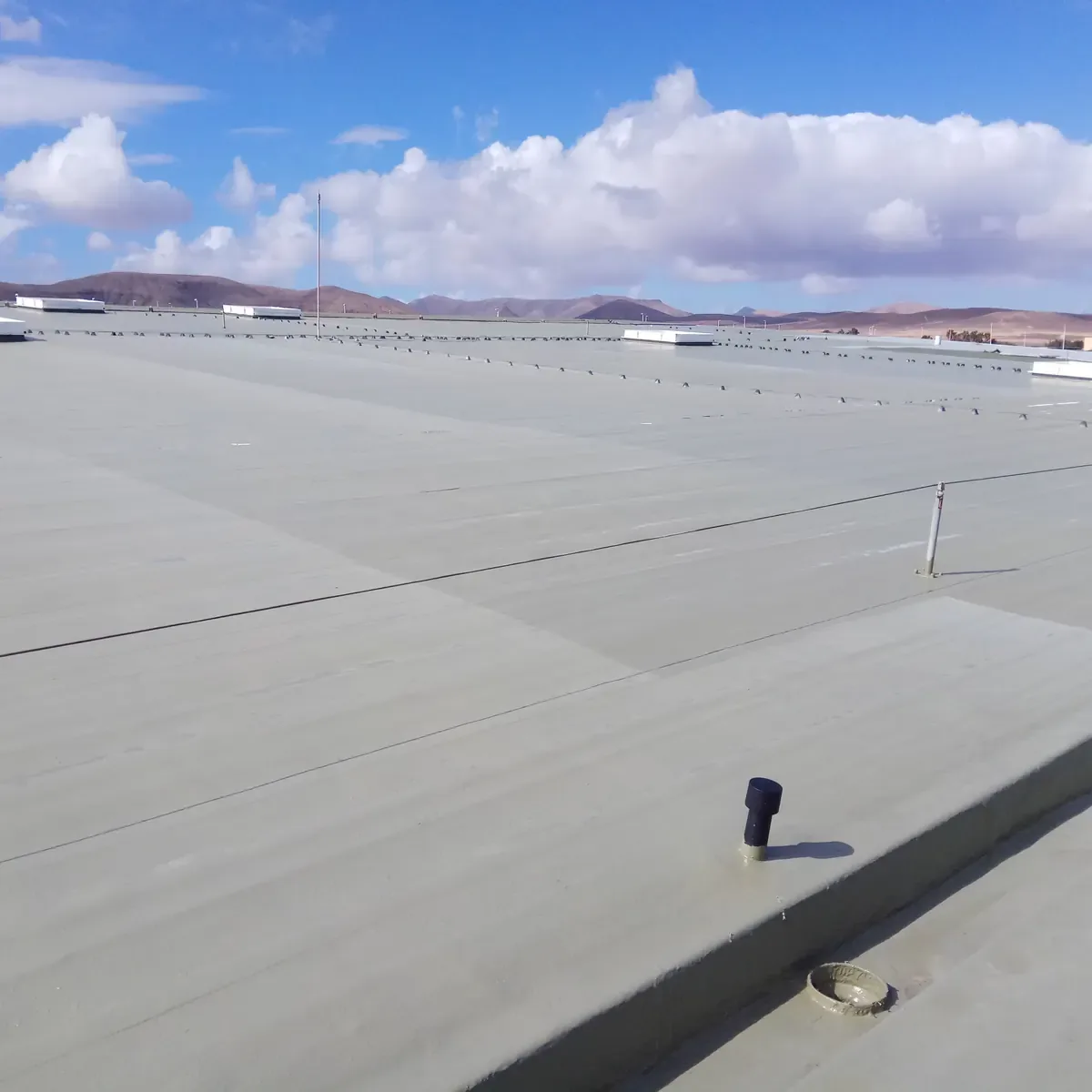
Many Egyptian roofs already carry old rolls, screed or tiles. In fact, the airport roofs page asks you to survey these interfaces with existing layers first. For example, the video above shows a 30,000 m² shopping-centre roof in Portugal coated with polyurea over asphalt. So an old layer is not always removed. However, it must be sound, clean and compatible, and a test area should prove the bond.
Roof Protection from Rain Step by Step
1. Survey falls and outlets
First, map every drain, upstand, joint and penetration. Then check where water ponds after washing. Fix the falls before you think about the membrane.
2. Prepare the deck
Next, test pull-off at 1.4 N/mm² or more. Keep moisture under 4% and the surface between 10 and 40 °C. Open the pore mechanically, repair cracks, take off sharp edges and vacuum the grit.
3. Prime damp or metal areas
If the slab is damp, apply two coats of epoxy primer and blind the second with quartz. Meanwhile, clean metal flashings and prime them with the polyurethane primer.
4. Spray, details at full thickness
Then spray hot: component A at 65 °C, B at 75 °C, hose at 65 °C, and at least 140 bar. Make sure 1.5–2 mm actually lands on the parapet and around each outlet. A thin corner is the leak.
5. Topcoat and accept
The resin is aromatic, so the colour can shift in the sun while strength stays. For that reason, an aliphatic topcoat goes where the roof stays exposed. Finally, walk the roof and accept every outlet.
Common Mistakes in Rain Waterproofing
The airport roofs page lists three:
- Ignoring falls, outlets and ponding while focusing only on the membrane field.
- Bridging movement joints or penetrations without a designed detail.
- Closing the build-up before checking moisture, adhesion, thickness, cure and weather.
Another common mistake is waiting for the leak. In fact, the best time to treat a roof is the dry summer before the storms.
Related Reading on Krypton Egypt
To choose between membrane types, read pure vs hybrid polyurea for roofs. If your roof has old rolls, see why bituminous membranes fail. For sheet-metal roofs, check metal roof waterproofing. Then use Krypton’s tool to choose your system by area, substrate and exposure.
FAQ
Why polyurea for rain on a live building?
It gels in about 4 seconds at 25 °C. So a bay is closed the same day, and the building keeps working.
How thick should the membrane be?
The typical rate is 1.5–2.0 kg/m², about 1.5–2 mm. That is data-sheet data, not a core from these roofs.
Conclusion: Protect the Lines Water Follows
Lasting roof protection from rain means one film over the field, the falls, the parapets and every outlet. Cairo and Berenice airports show Polyurea Rayston doing that over working halls. So prepare before the storms, download the data sheets, and ask Krypton Egypt for a technical quote.
No comment