


Rayston Spray Foam W40
Rayston Foam W40 Polyol / Rayston Foam W40 Isocyanate is a twocomponent rigid polyurethane spray foam with less than 80% closed cells. It is a
fully water-blown system and in compliance with 0 ODP and HFC/HCFC-free
environmental regulations. Rayston Foam W40 is designed for
the thermal insulation of vertical walls and ceilings inside, not subjected to permanent loads, with an
applied density of 38–42 kg/m3.
Rayston Spray Foam W50
Rayston Spray Foam W50 (A) Polyol / Rayston Spray Foam W50 (B)
Isocyanate is a two component Euroclass E reaction to fire polyurethane rigid
spray foam with less than 80% closed cells. It is a fully water blown system and in
compliance with 0 ODP and HFC/HCFC-free environmental regulations. Rayston
Spray Foam W50 has been designed for thermal insulation in
construction applications with an applied density of 48–56 kg/m3













Why sprayed polyurethane foam?
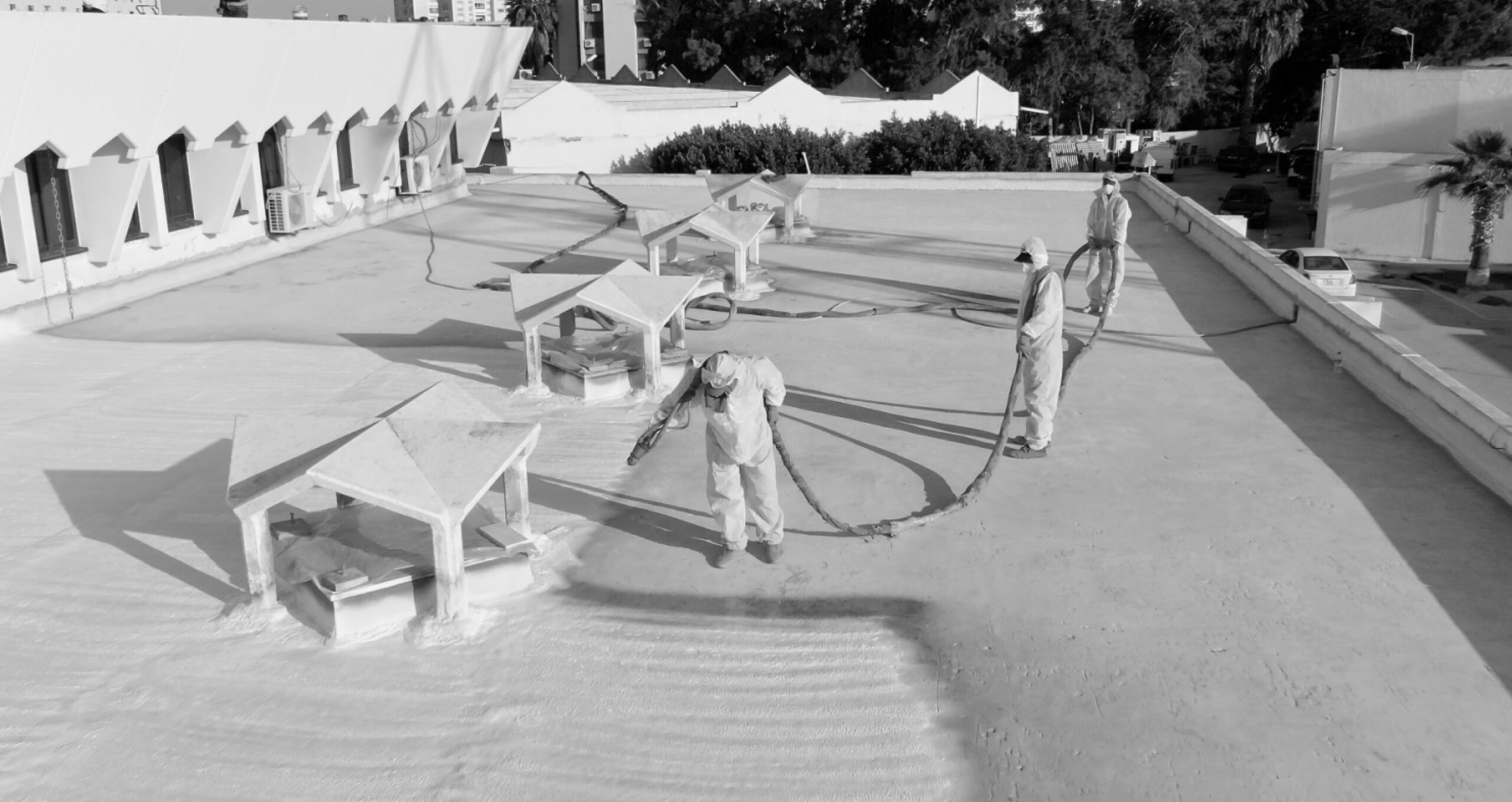
Rayston Spray Foam is a two-component rigid polyurethane system (polyol + isocyanate) sprayed directly onto the substrate, where it expands into a continuous insulation layer with no joints or thermal bridges. Water is the only blowing agent: the system contains no HFCs, HCFCs or VOCs, and the cured foam is 100% recyclable by mechanical means, and the declared thermal conductivity already takes ageing into account. On façades it also blocks liquid water while still letting the wall construction breathe.
Technical comparison
- Rayston Spray Foam 40W: applied density 38–42 kg/m³, thermal conductivity 0.031 W/m·K. A 50 mm layer gives a thermal resistance of 1.60 m²·K/W, and 100 mm gives 3.25 m²·K/W.
- Rayston Spray Foam 50W: applied density 48–56 kg/m³, thermal conductivity 0.030 W/m·K, compressive strength class CS(10/Y)200. A 50 mm layer gives 1.70 m²·K/W, and 100 mm gives 3.40 m²·K/W.
- Both systems: CE marked to EN 14315-1, Euroclass E reaction to fire, short-term water absorption ≤ 0.2 kg/m² and a water-vapour resistance factor μ ≥ 70.
Application conditions
Spray at 60–120 bar with components at 30–60 °C. Ambient temperature must be 0–40 °C, relative humidity below 90% and wind below 30 km/h, with no condensation on the substrate. Download the data sheets for the full performance tables, or contact us to size the insulation thickness for your roof or wall.