

Steel on the Egyptian coast, in a fertiliser plant or under a highway never stops fighting rust. Salt air, humidity, chemicals and abrasion attack every weak point, and a thin paint film rarely lasts. A polyurea coating for steel changes that equation, but only when it is part of a complete system: the right surface preparation, a compatible primer, the membrane and, where needed, a UV topcoat. This guide explains how Krypton builds that system, based on its page about steel protection in very aggressive atmospheres.
Why a polyurea coating for steel?
Conventional paints protect steel with thin films, which chip and crack over time. Sprayed polyurea, by contrast, builds a thick, elastic and seamless lining in one application. As a result, it resists impact and abrasion that would chip a brittle coat.
Krypton ProLine CH55 shows the numbers. Its TDS lists a maximum elongation of 450%, a tensile strength of 25 MPa and a tear resistance of 100 N/mm. Moreover, the TDS gives an adhesion to steel of ≥8 MPa. The gel time is 6 s at 25 °C, so the coating cures in place on beams, columns and tanks.
Corrosivity categories: speak the language of ISO 12944
Before choosing products, define the environment. The ISO 12944-2:2018 standard classifies how corrosive an atmosphere is, and it also classifies immersion conditions. For instance, Krypton’s primer datasheet refers to medium, high, very high and extreme environments: C3, C4, C5 and CX. It also names the immersion categories Im1, Im2 and Im4.
Krypton’s datasheets use the same categories. For example, the ProLine ZN Primer TDS recommends the primer for C3, C4, C5 and CX environments. Likewise, the ProLine CH55 TDS states a C5H and C5VH system certified in accordance with ISO 12944-6:2018. In that notation, H means high durability and VH means very high durability. You can read the scope of the test standard on the ISO page for ISO 12944-6:2018.
The polyurea coating for steel, layer by layer
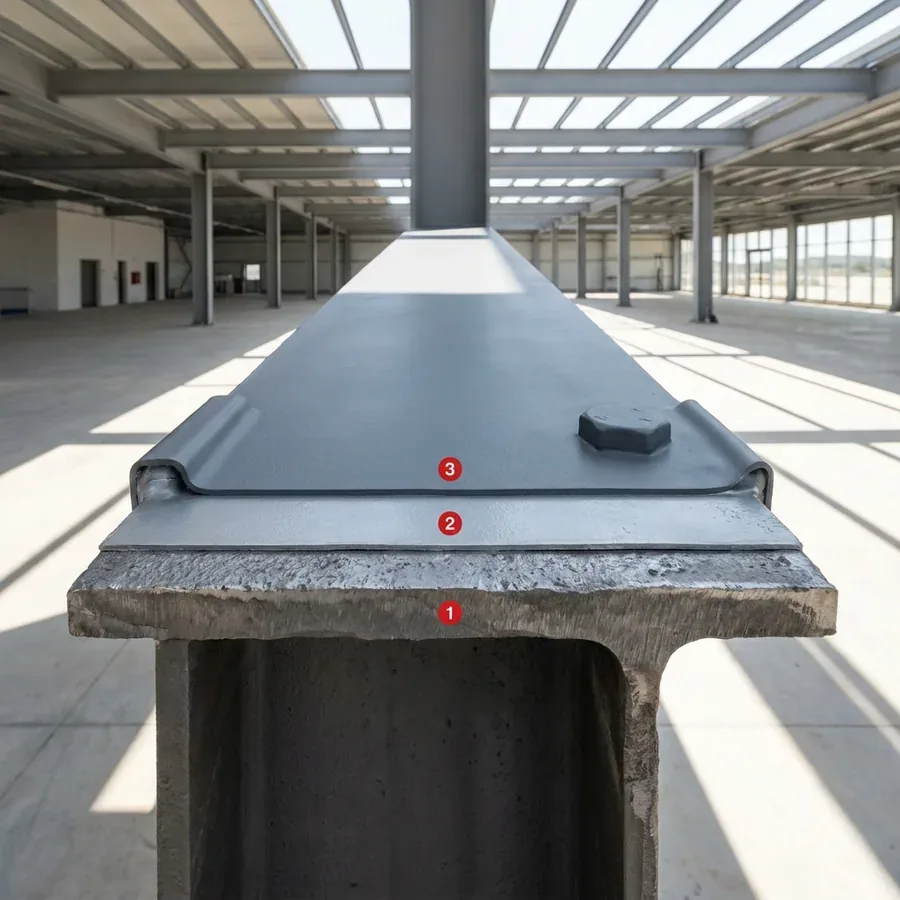
Krypton’s C5H steel page names three reference products. Together with a polyurea membrane, they form a full anti-corrosion build-up.
1. Primer: Krypton ProLine ZN Primer
Its TDS describes a single-component, moisture-curing, fast-drying anti-corrosive polyurethane primer with zinc and micaceous iron oxide (MIO). It provides cathodic (galvanic) protection and a long-term barrier effect. In addition, the TDS allows application down to -18 °C, at relative humidity up to 99%, with no dew point restrictions.
2. Intermediate: Krypton ProLine AC MIO
Next comes a single-component, moisture-cured polyurethane intermediate primer with micaceous iron oxide. In this way, it adds barrier thickness between the zinc primer and the finish.
3. Membrane: Krypton ProLine CH55
Where impact, abrasion or immersion matter, the polyurea membrane takes the main load. Its TDS describes ProLine CH55 as a pure polyurea for high chemical resistance, immersion and explosion mitigation.
4. Topcoat: Krypton ProLine PU 1000TC
Aromatic polyureas change colour in sunlight. Therefore, exposed steel needs an aliphatic finish. The ProLine PU 1000TC TDS describes a single-component aliphatic polyurethane topcoat. It lists a certificate as anti-corrosion system topcoat with polyurea, C5H and C5VH, according to ISO 12944-6:2018.
Surface preparation for a polyurea coating for steel
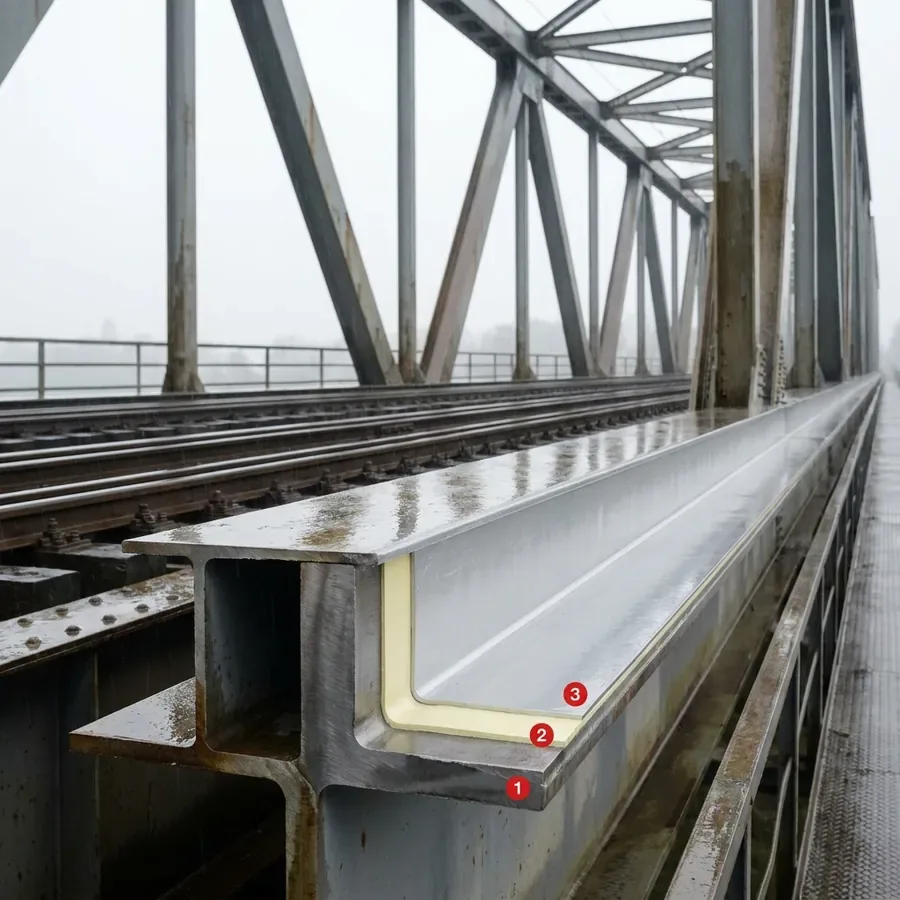
First of all, adhesion starts with the steel itself. For this reason, the ProLine ZN Primer TDS sets clear limits:
- Minimum preparation: St 2 according to ISO 8501-1.
- Recommended preparation: Sa 2½ according to ISO 8501-1.
- Surface profile: Ry5 of 30–75 µm according to ISO 8503-1.
- Primer thickness: 80 µm minimum, 100 µm average and 125 µm maximum dry film.
- Overcoating with polyurea: a maximum interval of 24–48 hours.
That last point is critical on site. If the polyurea crew arrives late, the primer window may close. So plan the spray date before you prime. Our article on polyurea surface preparation covers the concrete side of the same logic.
Polyurea coating for steel under abrasion: AB85H and AB95P
However, some steel does not just rust; it also wears. Hoppers, chutes, truck bodies and bulk storage take constant abrasion. For these cases, Krypton offers two more ProLine grades.
- Krypton ProLine AB85H: a hybrid polyurea for abrasion and impact. Its TDS lists 400% elongation, 15 MPa tensile strength and 10 mg Taber abrasion loss.
- Krypton ProLine AB95P: a 100% pure polyurea. Its TDS lists 445% elongation and 20 MPa tensile strength. It also keeps its physical characteristics from -40 °C to +120 °C.
Krypton’s case on ProLine AB85H on an exposed airport structure shows the hybrid on structural steel.
Polyurea coating for steel that is immersed or buried
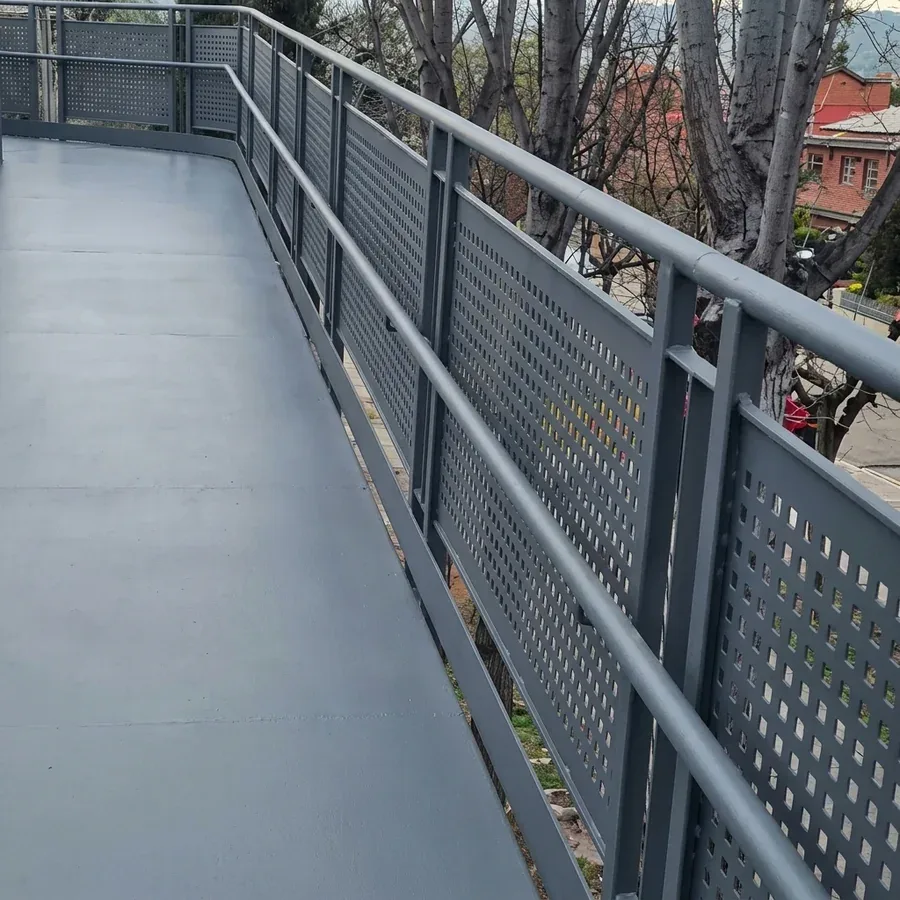
Not all steel faces only the atmosphere. There are buried pipes, chemical tanks and structures in salt water. In these cases, the ProLine CH55 TDS lists clear uses, including coating buried pipes, even in soils with high moisture and chemical content, and coating tanks that contain chemical liquids.
In addition, the TDS states an Im2 and Im3 continuous immersion system, for salt water, brackish water and soil, with very high durability (VH) under ISO 12944-6:2018. So when steel sits under water or in the ground, write the immersion category into the specification, just as you write the atmospheric class.
Common mistakes on steel projects
- Skipping the corrosivity class: write C4, C5 or CX in the specification, not just “anti-rust”.
- Weak blasting: a membrane cannot fix poor preparation. Meet the Sa grade and profile first.
- Missing the window: respect the 24–48 hour overcoating interval between primer and polyurea.
- Leaving aromatic polyurea bare: add an aliphatic topcoat on exposed steel when colour matters.
Frequently asked questions
Is a polyurea coating for steel better than paint?
In general, it is thicker, more elastic and more impact-resistant than a thin paint film. Even so, it works best inside a certified system with a zinc primer and a topcoat.
Can polyurea protect galvanized steel?
Yes, with the right primer. Krypton’s page on metal structures and engineering names ProLine PU AL Primer and ProLine PU 1000TC as reference products.
Does Polyurea Rayston work on steel too?
Its TDS lists protective coating for metallic structures among its applications. Read more in our post on Polyurea Rayston hot-spray waterproofing.
For full product data, see the Krypton ProLine PU 1000TC product page on Krypton Chemical. For a steel protection project in Egypt, contact the Krypton Egypt team.
No comment