


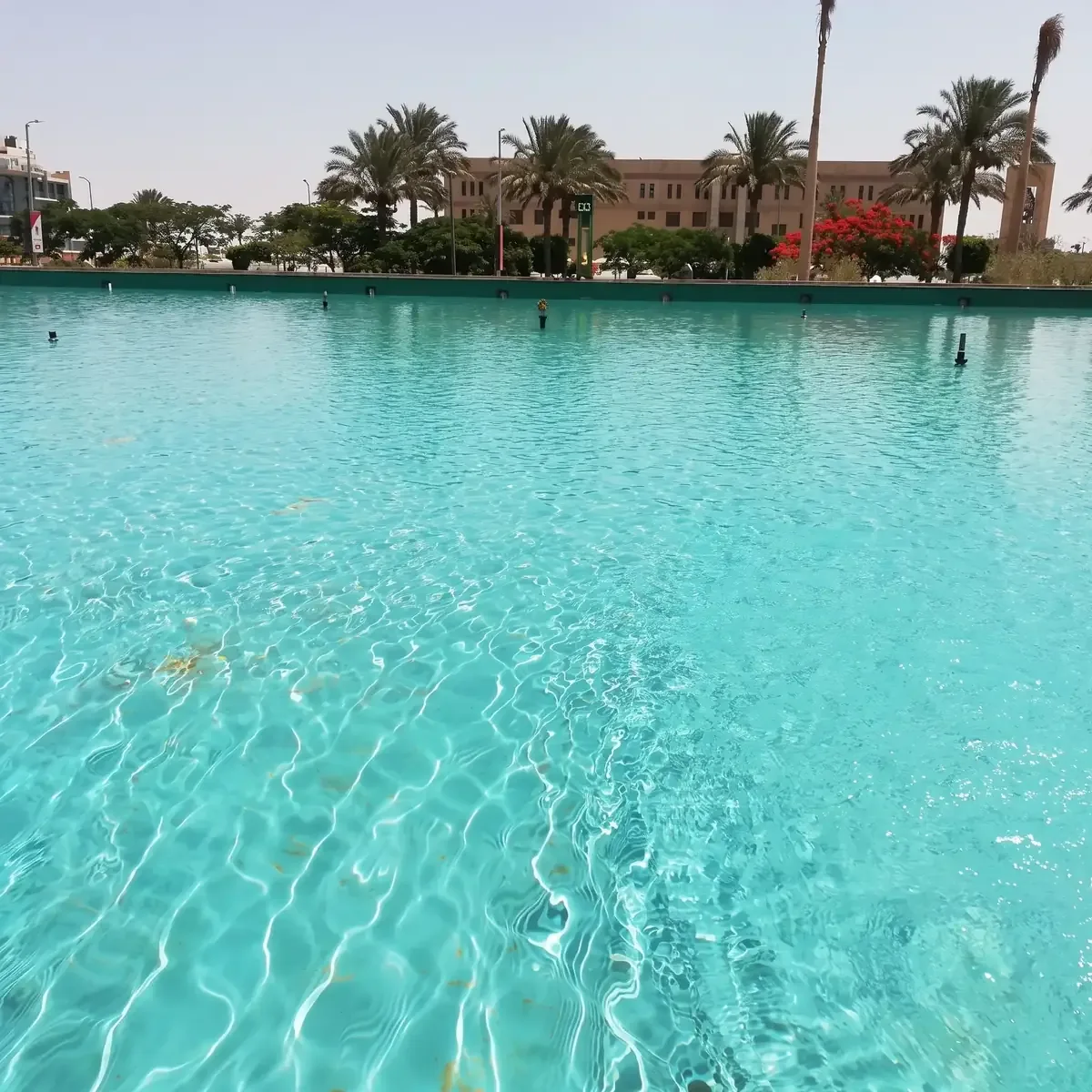
A fountain never dries. Water stands in it, jets break the surface and the sun heats the shell every afternoon. In Egyptian compounds and malls, many fountains also sit over parking or occupied rooms. So fountain waterproofing is not decoration. If the basin leaks, the water does not stay in the garden. It finds the ceiling below.
Krypton Chemical lined the fountain basins at Arkan Plaza, Sheikh Zayed, with Polyurea Rayston, its hot-spray pure polyurea. The Arkan Plaza project page explains why: it builds a thick elastic film in one pass and gels before it can run off a vertical face. For decorative fountains in general, Krypton’s application page lists a build-up of Rayston Epoxy Plus, Polyurea Rayston A and an Impertrans finish.
Why Fountain Waterproofing Is Harder Than It Looks
A basin is a box of corners, steps and outlets. Those are exactly the lines that open when a lining has joints. In addition, Krypton’s decorative fountains page lists the loads: continuous immersion, splash zones, treatment chemicals and frequent wet–dry cycling at edges and overflows.
The details matter most. The official page names basin floors and walls, nozzles, pipe penetrations, overflows, weirs, lighting sleeves and perimeter upstands. Each needs a continuous, documented detail before the lining route is fixed.
Heat is the Egyptian factor. At Arkan Plaza, Krypton notes that the Sheikh Zayed sun heats the shell every afternoon. Meanwhile, the water stays cooler. As a result, the corner between wall and floor works every day.
The Arkan Plaza Case: A Fountain over a Building
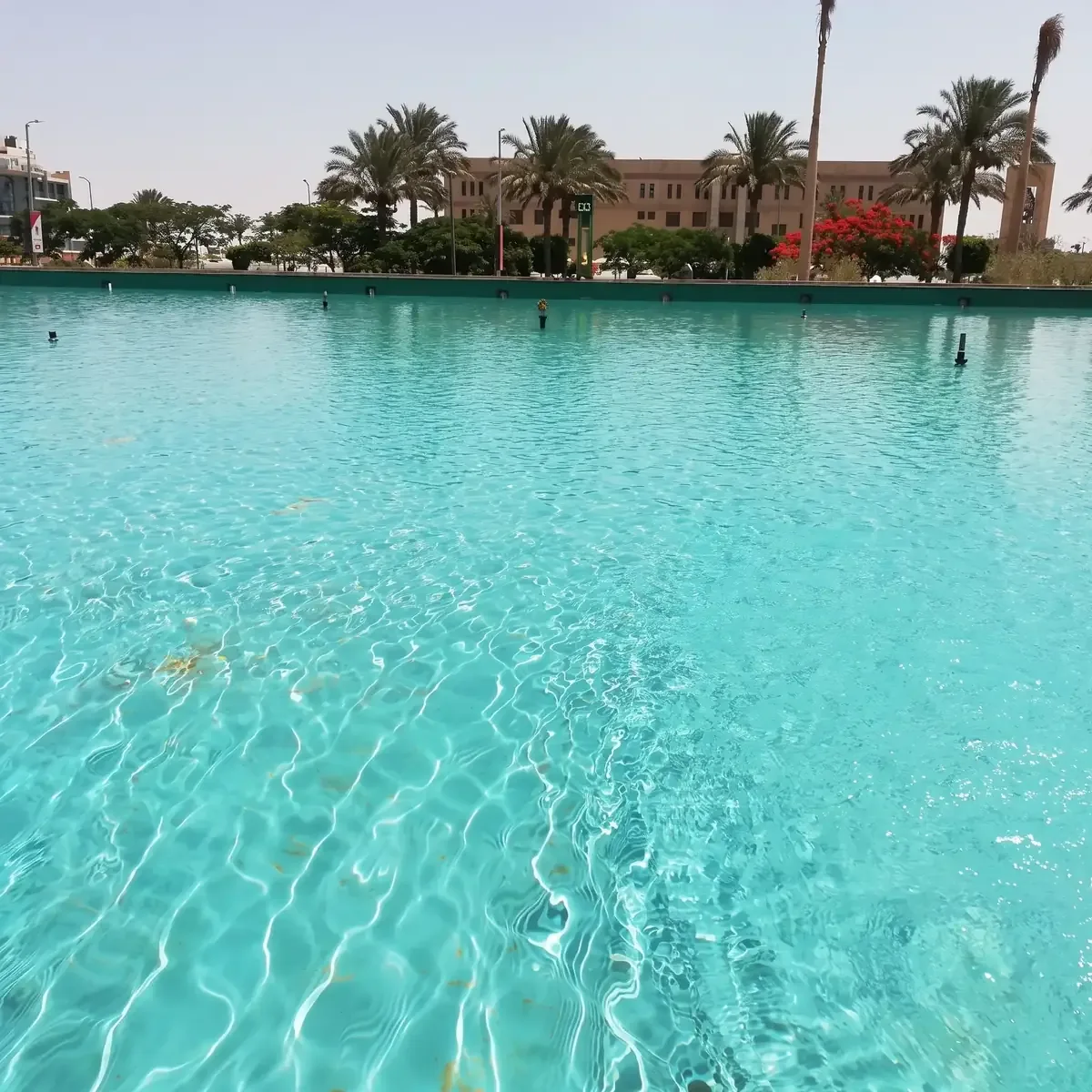
Arkan Plaza sits in Sheikh Zayed, on the west side of Cairo, beside Aeon Towers. Its fountains are basins that stay full, in hard sun, above the rooms and parking under them.
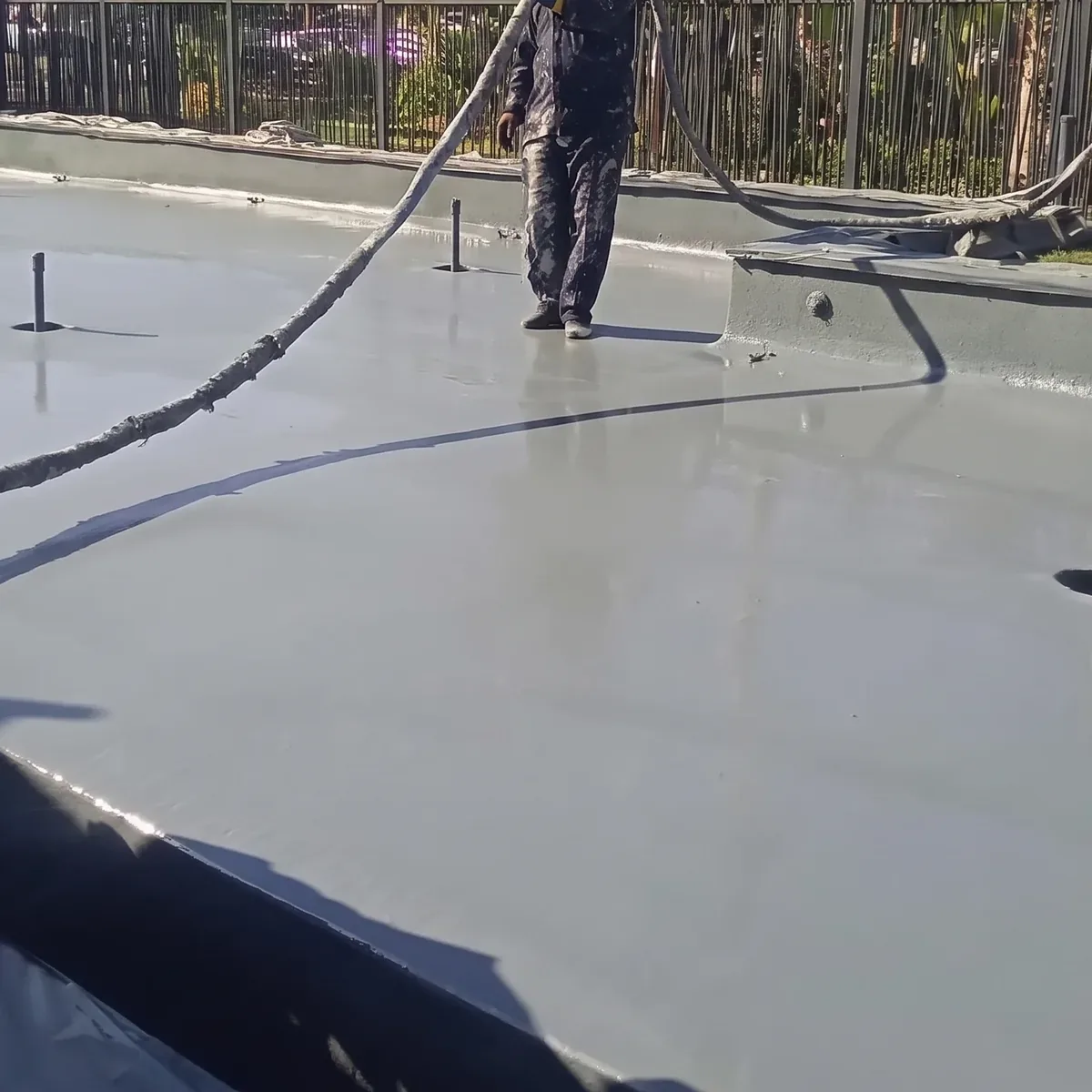
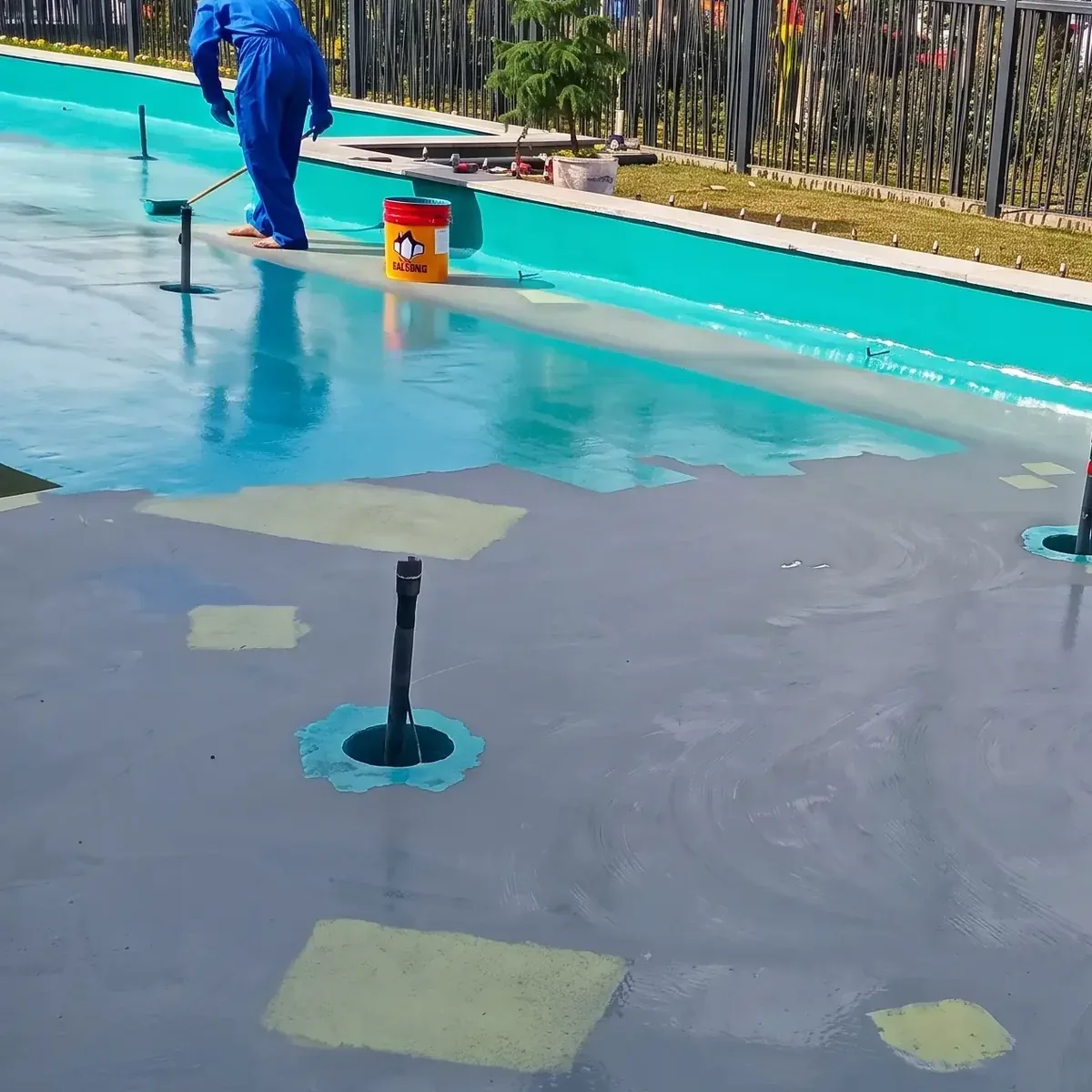
The lining is Polyurea Rayston, sprayed hot. A grey membrane goes down first. Then a turquoise finish covers the basin that people see. As Krypton puts it, the waterproofing is the polyurea, and the colour is the face on top of it.
Polyurea Rayston: Official Figures for Fountain Waterproofing
These values come from the Polyurea Rayston TDS, as quoted on the Arkan Plaza page.
| Property | Official value |
|---|---|
| Typical build | 1.5–2.0 kg/m² (about 1.5–2 mm) |
| Gel time | About 4 s at 25 °C |
| Elongation | 324% |
| Tensile strength | 16.2 MPa |
| Approvals | CE to EN 1504-2; ETA 16/0148 |
Krypton adds an honest note. These are typical product data, not a thickness measured in that basin. Likewise, the CE marking and ETA belong to the product, not to a test in that fountain. You can check the ETA in the EOTA database, and the Polyurea Rayston product page shows the range.
Fountain Waterproofing Step by Step
1. Prepare the concrete
First, the support must be flat, compact and cohesive. Pull-off should be at least 1.4 N/mm². Cut out and fill cracks. Keep moisture under 4% and the concrete between 10 and 40 °C.
2. Prime for the bond
Next, if the slab is damp behind, apply two coats of epoxy primer. Blind the second with quartz. On a fountain deck over a building, that bond stops blisters when the shell heats up.
3. Spray hot, details first
Then spray. Krypton gives resin at about 65 °C, isocyanate at about 75 °C, hose at about 65 °C and at least 140 bar at the gun. Close outlets and internal corners in the same pass. Where a corner needs a second pass, follow within about two hours.
4. Finish and wait
After that, add the visible finish. Polyurea Rayston is aromatic, so sunlight can shift its colour while strength stays. Finally, wait. Light contact is a matter of hours, but filling is a matter of days.
The Outlets: Where Most Fountains Fail
At Arkan Plaza, the outlets in the floor were taken inside the membrane. They were not cut through it afterwards. This one rule prevents many leaks.
So map every nozzle, light and overflow before spraying. Then make each one part of the same film. In short, a fountain is only as tight as its smallest penetration.
Fountain Waterproofing in Egyptian Projects: Questions to Ask First
Fountains now appear in residential compounds, hotel entrances, mall plazas and office districts. Most sit on a concrete slab, not on soil. So start with four simple questions. What is under the basin? What water treatment will run? How many nozzles, lights and overflows are there? And is the basin new, or old and cracked? Only then do we fix the system, the thickness and the programme.
Common Fountain Waterproofing Mistakes
Krypton’s application page lists three errors:
- Ignoring chlorination or treatment chemistry when choosing the lining and finish.
- Treating the floor as the whole job and missing walls, overflows, nozzles and lights.
- Closing the build-up before checking moisture, adhesion, thickness, pinholes and cure under immersion.
Another mistake is filling too early. The Arkan Plaza page is clear: the fountain stays empty until hardness has climbed.
Related Reading on Krypton Egypt
Pools share many of these details, so see our polyurea pool coating guide. For soil-filled basins, read planter box waterproofing. For primers and moisture, check the surface preparation guide. Then use Krypton’s tool to choose your system by area, substrate and exposure.
FAQ
Why pure polyurea in a fountain?
A fountain stays wet, and jointed linings open at corners and outlets. Hot-spray pure polyurea gels in seconds and wraps those details in one film.
Will the colour hold in the sun?
The bare film is aromatic, so its colour can shift. The visible colour comes from a separate finish coat.
Conclusion: One Film, Every Outlet Inside
Successful fountain waterproofing means one continuous lining from floor to wall, with every outlet inside it. Arkan Plaza in Sheikh Zayed shows how Polyurea Rayston does that over an occupied building. Download the data sheets, map your details, and ask Krypton Egypt for a technical quote.
No comment