


A park lake looks calm, yet it works harder than most roofs. Water stands on it every day, the sun heats its walls, and visitors walk its edge. So lake lining is the decision that keeps the water level steady. In Egypt, lakes now sit in public gardens, compounds and hotels, and many sit beside buildings. A leak there does not stay a technical note.
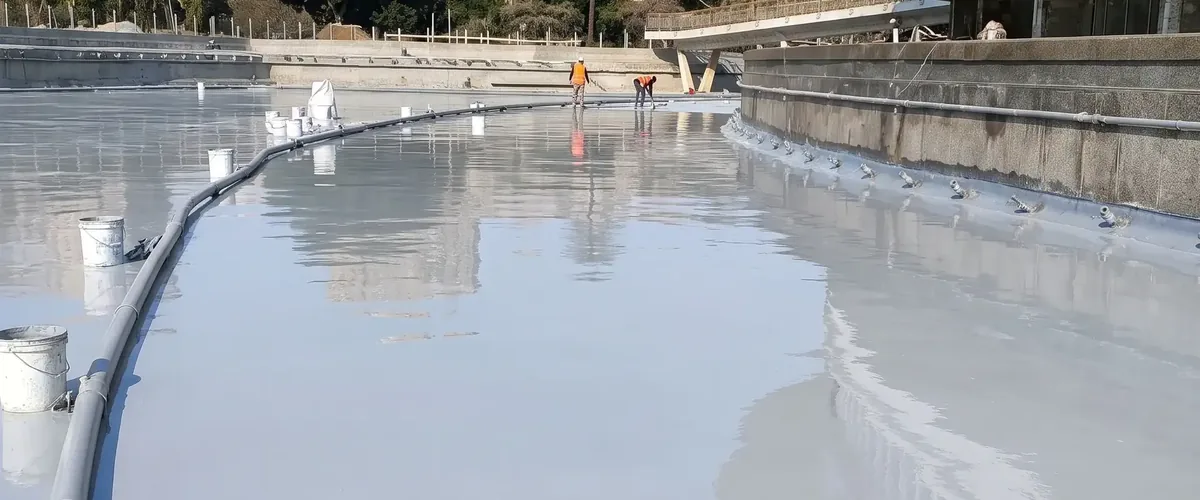
At Merryland Park in Heliopolis, Krypton Chemical lined the lake in 2019 with Polyurea Rayston, its hot-spray pure polyurea. For ponds and artificial lakes in general, Krypton’s ponds and lakes application page gives a reference build-up: Rayston Epoxy 100, then Polyurea Rayston A, then an Impertrans finish.
Why Lake Lining Fails at the Details
A lake is a basin of beds, banks and edges. According to Krypton, these see wet–dry cycling, UV, and even root or wildlife disturbance. In addition, concrete, masonry or prepared earth bring porosity, cracks and settlement.
Most leaks, however, do not start in the middle. They start at inlets, outlets, overflows, pipe penetrations and bank–bed transitions. That is why the official page asks for a continuous, documented detail at each of these lines before anyone fixes the lining route.
The Merryland Case: A Lake in a Heliopolis Garden
Merryland is one of the old public gardens of Heliopolis. Also, its lake sits against a curved building and must hold water through a Cairo summer. As the Merryland project page puts it, a leak drops the level, stains the promenade and closes the garden.
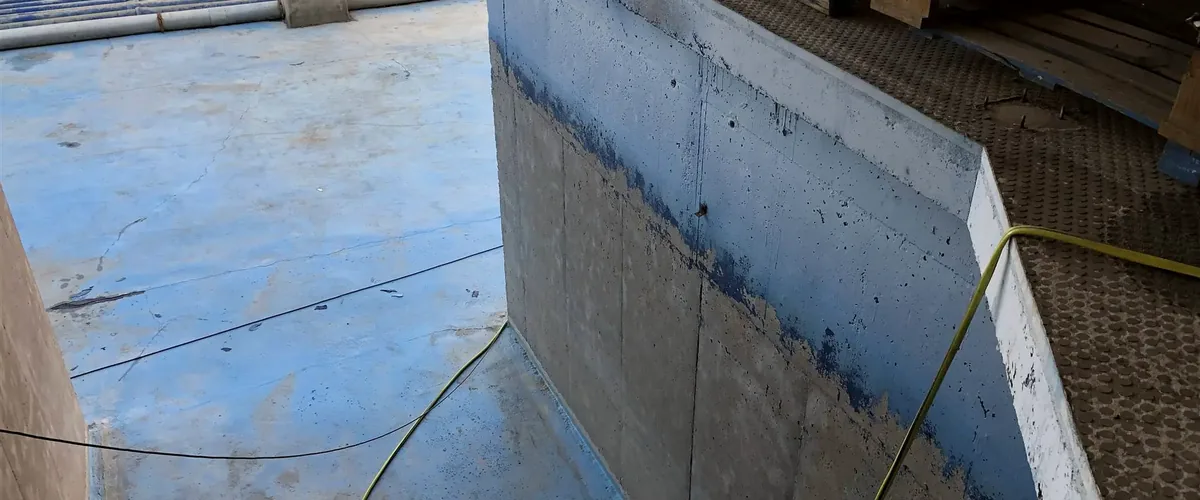
The hard part was geometry. In fact, the floor meets a tall concrete wall on a curve, and pipes pierce that wall. Meanwhile, the wall heats in the sun while the water stays cooler. As a result, the corner works every afternoon.
The answer was one film. Besides, it runs from the floor, up the curved wall, and around every outlet, in light grey.
Official Figures for Lake Lining with Polyurea Rayston
These values are the product’s own data, as quoted on the Merryland page.
| Property | Official value |
|---|---|
| Typical build | 1.5–2.0 kg/m² (about 1.5–2 mm) |
| Gel / tack-free | About 4 s / about 30 s at 25 °C |
| Elongation | About 324% |
| Tensile / tear strength | About 16.2 MPa / 69 N/mm |
| Water permeability | 0.002 kg/m²·h^0.5 |
| Hardness | Shore 87A / 35D |
Krypton stresses the last property for lakes. Low water permeability is what earns the specification. Furthermore, a four-second gel matters on an open site, because garden dust has no time to settle in the wet film.
The ponds page also lists CE marking to EN 1504-2, ETA 16/0148, BBA 18/5582 and WRAS 2208579 for the system’s products. You can check ETAs in the EOTA database, and see the range on the Polyurea Rayston product page.
Lake Lining Step by Step
1. Earn the bond
First, test the concrete. Pull-off should reach at least 1.4 N/mm². Keep moisture under 4%, the surface between 10 and 40 °C, and air humidity under 85%.
2. Clean the old basin
Next, grind or blast to open the pore. Repair cracks, knock off sharp edges and vacuum. A lake that has already held water needs this most. In addition, its surface can look sound and still carry laitance and old biofilm.
3. Prime
If damp comes from below, apply two coats of epoxy primer and blind the second with quartz. Clean metal pipes and prime them with the polyurethane primer.
4. Spray the details first
Then spray hot: component A at 65 °C, B at 75 °C, hose at 65 °C, and at least 140 bar. Also, the floor is the easy pass. Instead, the curved wall, the cove and each outlet decide the lake. Tie the film into each pipe flange, so water cannot track behind it.
5. Flood before opening
Finally, walk the details and accept the outlets. Then flood the empty lining before the garden reopens. That test tells you more than any gauge.
Choosing a Lake Lining Route
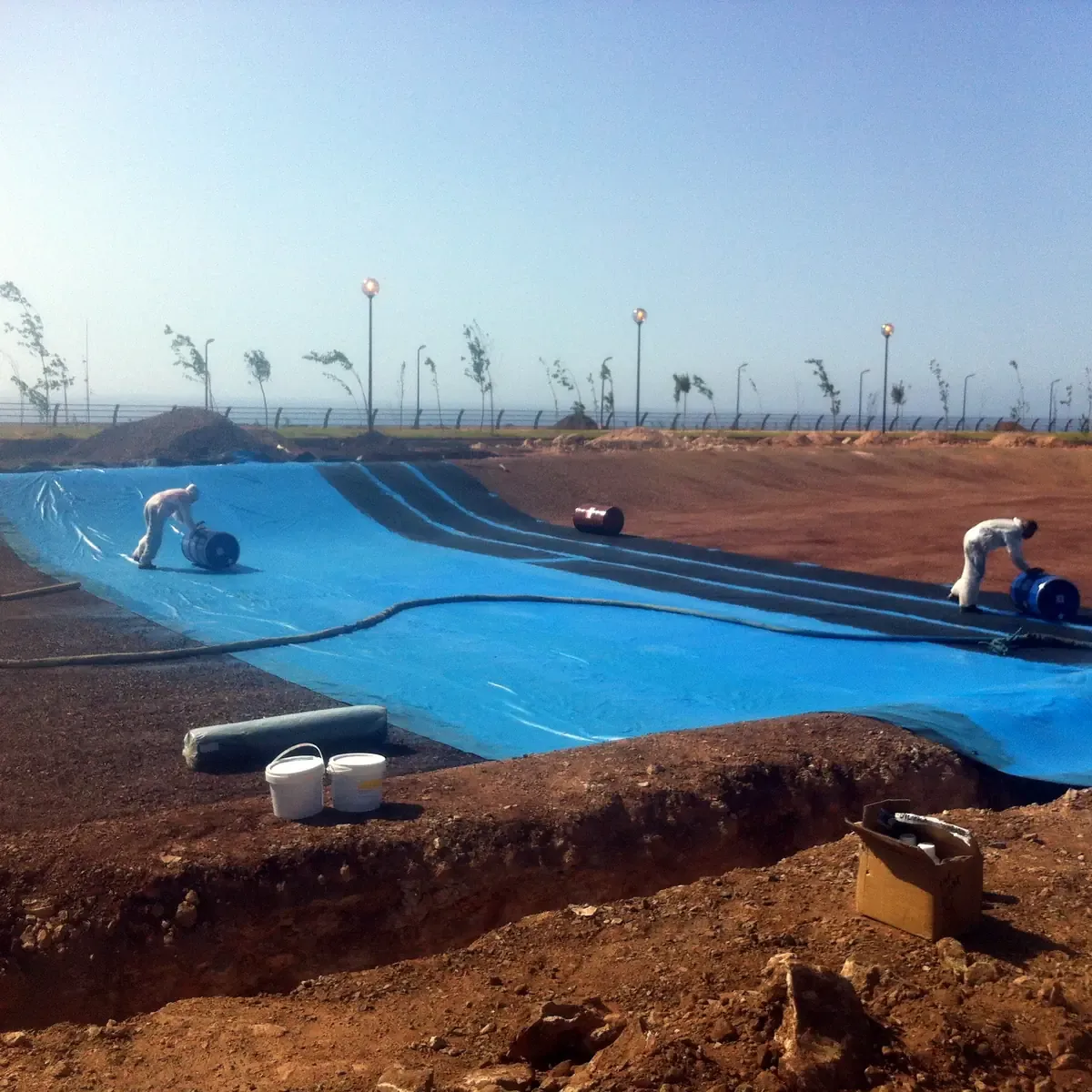
Not every lake is a concrete box. In Algeria, for example, Krypton lined a 4,000 m² urban lake in 2013 over earth. In fact, the crew first laid Geomax Spray NMDC geotextile, then sprayed Impermax Polyurea H Flex on top.
At Parque Warner in Madrid, by contrast, Krypton re-lined a theme park lake in 2019 with Polyurea Rayston X5. That lake mixes floors, walls, narrow channels and pipes. So the substrate and shape choose the route, not habit.
Common Lake Lining Mistakes
Krypton’s application page lists three:
- Treating the open bed as the whole lining, and omitting banks, overflows, inlets, outlets or edges.
- Ignoring water chemistry, UV and wet–dry cycling at the waterline.
- Closing the build-up before checking adhesion, thickness, pinholes and cure under water.
Colour is a fourth point. Polyurea Rayston is aromatic, so sunlight can shift its shade. Strength stays, though. Where the owner wants the colour held, an aliphatic topcoat does that job.
Related Reading on Krypton Egypt
Pools share the same immersion logic, so read our polyurea pool coating guide. For drinking water, see water tank coating with polyurea. For primers and damp concrete, check the surface preparation guide. Then use Krypton’s tool to choose your system by area, substrate and exposure.
FAQ
How fast does the lining gel on an open lake?
Polyurea Rayston gels in about 4 seconds at 25 °C. Besides, it is tack-free in about 30 seconds, so dust and leaves have little time to stick.
Can the lake be filled the same day?
Hardness builds from the first minutes, and the data sheet tracks it over four days. Accept the details and flood-test first.
Conclusion: One Film, Floor to Wall
Good lake lining means one continuous film over the floor, up the walls and into every outlet. Merryland in Heliopolis shows Polyurea Rayston doing that through a Cairo summer. So download the data sheets, map your details, and ask Krypton Egypt for a technical quote.
No comment