

In many Egyptian buildings, the water supply starts below ground. A concrete tank sits under the villa, the tower or the compound, and pumps feed every tap. So underground water tank waterproofing has two jobs at once. Also, it must keep drinking water in and clean, and it must keep the slab and soil around it dry. Once the lid goes on, nobody wants to come back.
For buried tanks, Krypton’s buried tanks application page lists two reference products: Humidity Primer and Impermax Aqua 2K. According to its TDS, Impermax Aqua 2K is a solvent-free, two-component polyurethane membrane. In fact, it carries drinking-water certification under European regulation 98/83/EC from the Applus laboratory, report 928/08/6545.
Why Underground Water Tank Waterproofing Fails
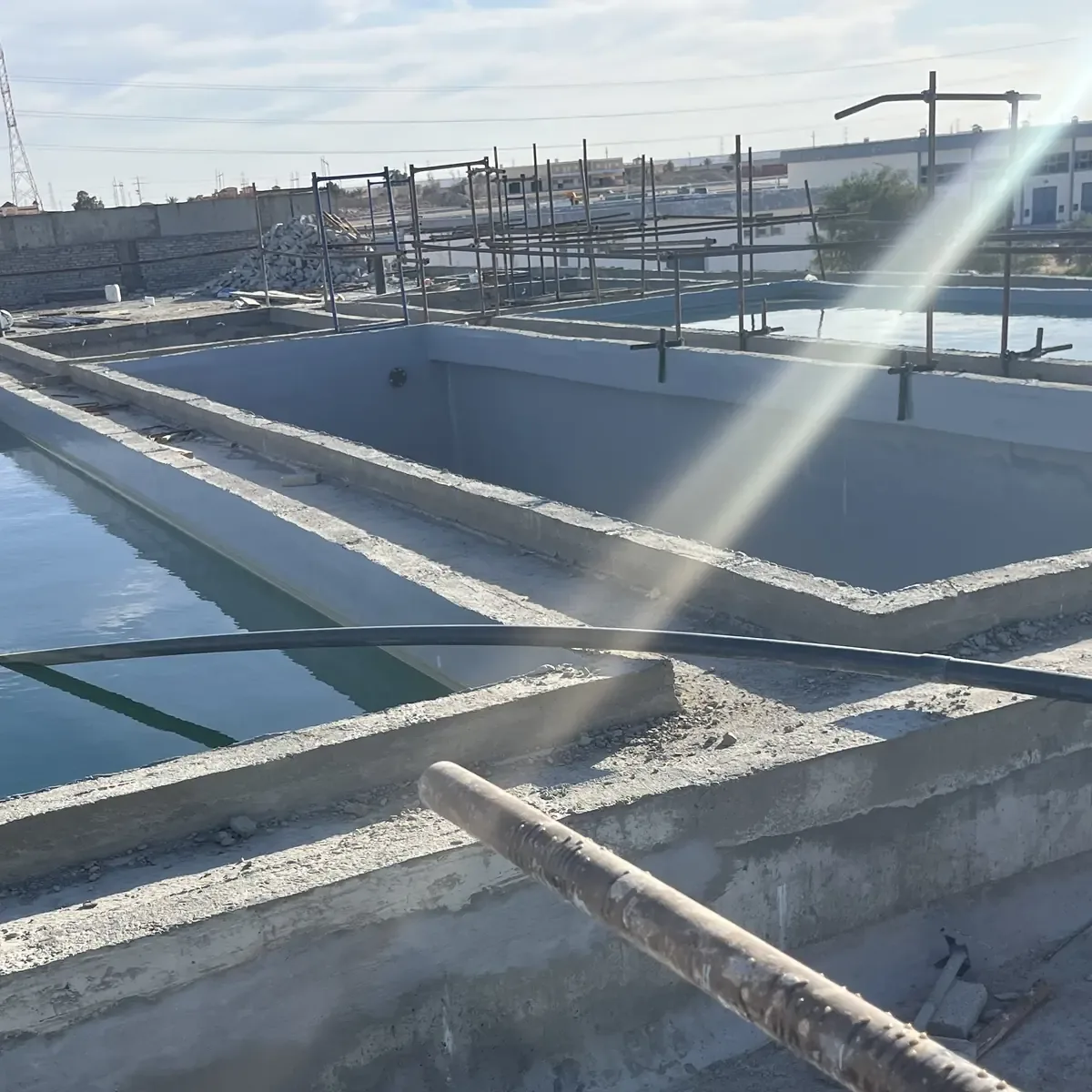
Krypton’s application page explains that a buried tank faces two different worlds. Outside, the walls see soil loading, groundwater and backfill abrasion. Meanwhile, inside, they see the stored water, cleaning cycles and inspection access.
In addition, concrete shells bring porosity, alkalinity and cracking risk. Joints, wall-to-base transitions, manways, pipe penetrations and sumps need the same continuity as the walls.
In practice, most leaks start at the outlet or at the floor-to-wall line. Indeed, that is where the Ramla team looked first during the water test.
Why Impermax Aqua 2K for Drinking Water
Solvent-free
The TDS states that the product contains no solvents. Therefore the product suits indoor or poorly ventilated spaces, which describes most tanks.
Seamless
It forms a continuous membrane with no joints. Moreover, crews can thicken it for walls, or reinforce it with Geomax for thick layers on slopes.
Stable in immersion
The cured membrane is stable even in permanent immersion. In fact, water and chlorinated water at 20 ppm both score 5 of 5 in its chemical table.
Official TDS Data: Impermax Aqua 2K
| Property | Official value |
|---|---|
| Rate per coat | Up to 1.5 kg/m², about 1 mm |
| Hardness | 66–69 Shore A |
| Elongation / tensile | >130% / 4 MPa |
| Adhesion to concrete | 1.5 N/mm²; 2.5 MPa with Rayston Epoxy 100 |
| Service temperature | −15 °C to 80 °C |
| Light traffic / full cure | Next day / 3–4 days |
| Drinking water | Applus 928/08/6545 |
| CE marking | EN 1504-2 (0370-CPR-2247) |
EN 1504-2 is a European standard for concrete protection; CEN-CENELEC publishes it. You can also see the product on its kryptonchemical.com page.
Underground Water Tank Waterproofing Step by Step
1. Deal with groundwater first
However, the TDS is strict: the support must be completely free from water pressure from below. So stop groundwater first, then line the tank.
2. Check the concrete
Next, confirm cohesive strength of at least 1.5 MPa and compression of at least 25 MPa. Also, keep moisture under 4%. On new concrete, wait at least 21 days.
3. Prepare and prime
Then sand or blast the surface. Where moisture is high, use a primer advised by Krypton. In addition, for moisture between 4 and 8%, Humidity Primer targets that range.
4. Mix and spread
Mix component A gently, add B, and stir two more minutes. Next, spread with a squeegee or toothed spreader. Then run a spiked roller in a crossing pattern within 10 minutes to remove bubbles.
5. Second coat and walls
A second coat can follow 24 hours after the first takes foot traffic. Also, on walls, add Thickening Additive to stop sagging.
6. Wash and fill
Finally, wait 3–4 days for a working cure. In addition, wash the tank thoroughly before it contacts drinking water. Then fill it and watch the level.
Egyptian Tank Cases: Ramla and the CBD
At Ramla, a coastal compound, crews lined the tanks with hot-spray Polyurea Rayston. According to the Ramla project page, the outlet flange sits in the same film as the wall. Then the team filled the tanks, and they held their level. As Krypton puts it, a lining that looks even and loses level is not finished.
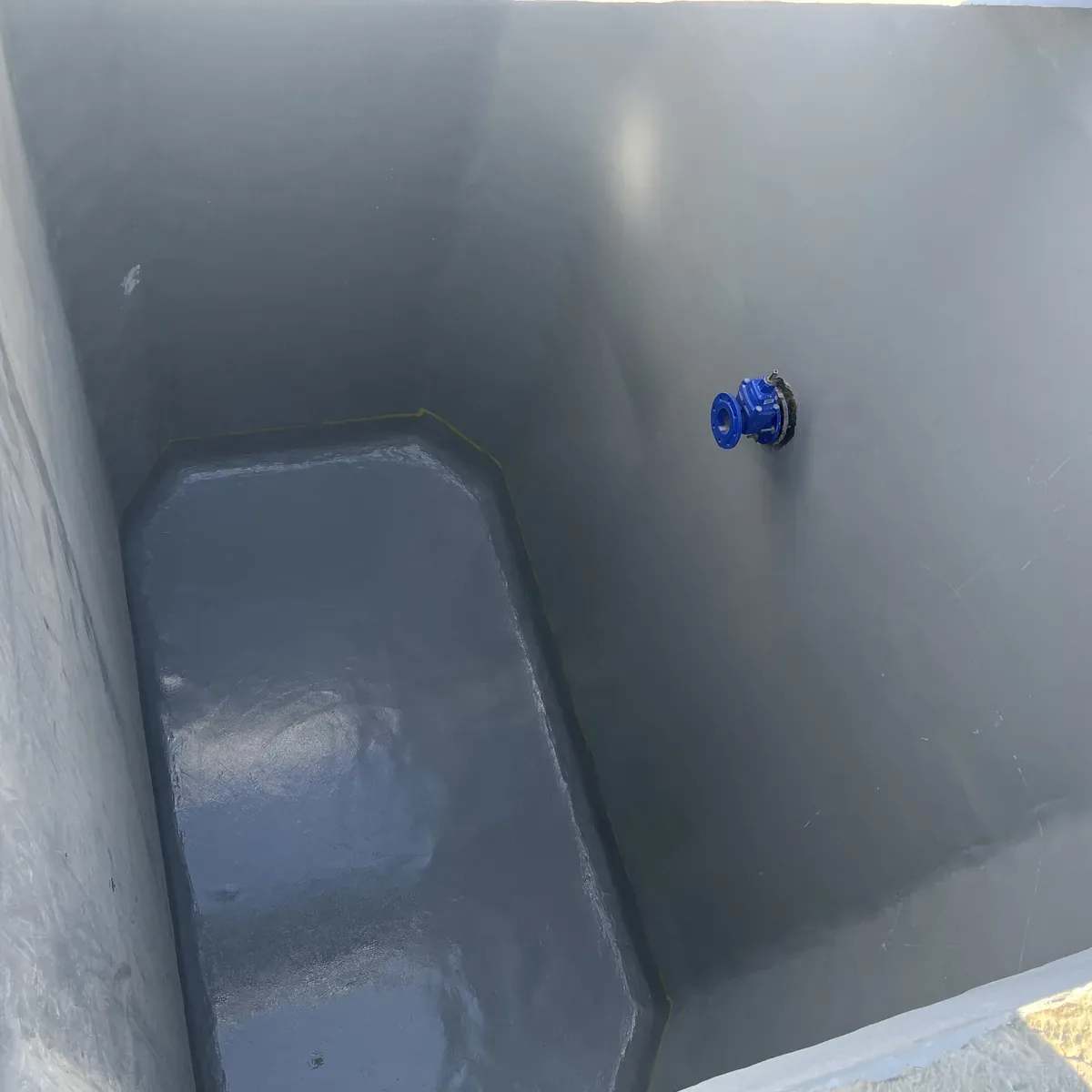
In the Capital Business District of the New Administrative Capital, tanks took Polyurea Rayston together with Impermax 2K, both hot-sprayed. So Krypton matches the resin to the site. Aqua 2K suits tanks without a spray rig, while hot-spray polyurea suits large, fast jobs.
Planning Underground Water Tank Waterproofing in Egypt
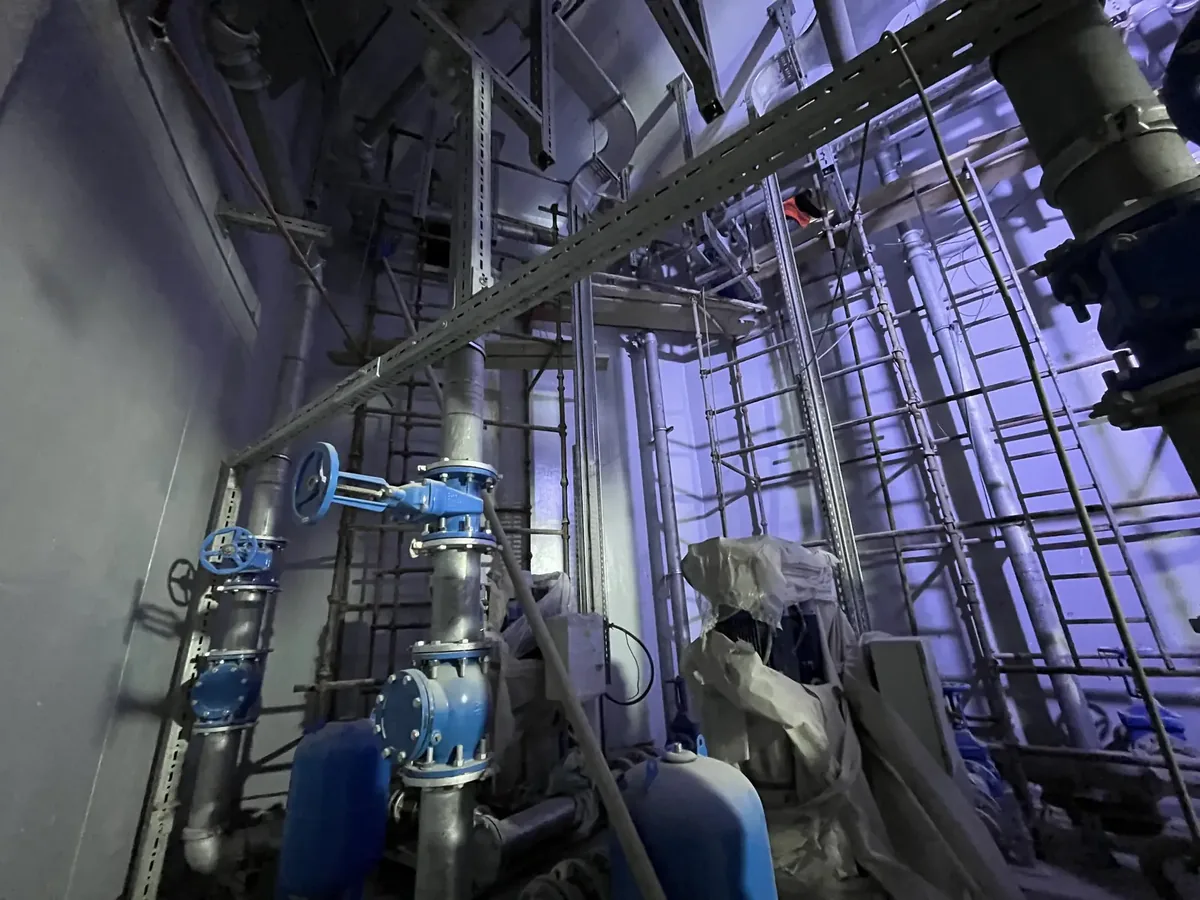
Before any quote, gather a few facts. First, how deep is the tank, and is there groundwater around it? Second, is the shell new or old, and does it show cracks or leaks? Third, how many pipes, manways and sumps pass through it? Finally, will a spray rig fit through the access, or does the job need a hand-applied system? Besides, these answers decide the route for your underground water tank waterproofing, not habit.
Common Mistakes with Buried Tanks
The buried tanks page lists three:
- Treating outside burial and inside immersion as the same condition, without checking chemistry and water pressure.
- Applying over damp, dirty or weak concrete without a documented moisture check.
- Omitting manways, pipes, wall-to-base lines and terminations, or closing the lining before checking continuity, adhesion, thickness and cure.
Also, another mistake is filling too soon. Instead, follow the TDS cure and wash the tank first.
Related Reading on Krypton Egypt
For a hot-spray lining, read water tank coating with polyurea. Also, for sewage chambers, see manhole coating with polyurea. For groundwater outside the tank, check foundation waterproofing. Then use Krypton’s tool to choose your system by area, substrate and exposure.
FAQ
Is Impermax Aqua 2K safe for drinking water?
In addition, its TDS cites drinking-water certification under 98/83/EC, Applus report 928/08/6545. Also, wash the tank before use.
Does it change colour?
Still, under sunlight it turns yellow-brown, without losing mechanical properties. However, inside a dark tank, this rarely matters.
Conclusion: Dry Outside, Clean Inside
Good underground water tank waterproofing starts by stopping groundwater, then lining every wall, joint and outlet in one film. Impermax Aqua 2K, with the right primer, gives a certified drinking-water route. So download the TDS, map your tank, and ask Krypton Egypt for a technical quote.
No comment